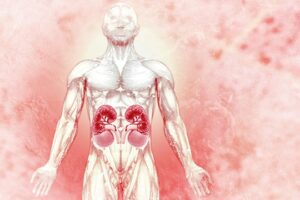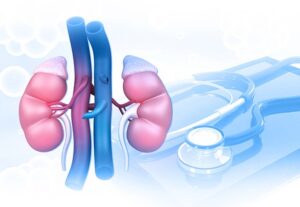


The term “chronic kidney disease” means a gradual loss of kidney function.
It is histological damage characterized by suboptimal glomerular filtration rate (GFR) persisting for at least 3 months. Chronic kidney disease (CKD) has five stages from very mild damage in Stage 1 to complete kidney failure in Stage 5.
If the damage gets worse over time, your kidneys may stop working. This is called end-stage renal disease (ESRD) or kidney failure. This may further lead to dialysis or a kidney transplant in order to live.
In 2017, the number of deaths associated with CKD or CKD-related complications was estimated to be 1.2 million. Between 1990 and 2017, CKD rose as a cause of global mortality from the 17th to the 12th leading cause of death. There was a 46% increase in the total number of deaths caused directly or indirectly by cardiovascular disease linked to kidney dysfunction.
How is CKD related to Covid-19 Mortality?
Covid-19 has caused a major global pandemic infecting over millions of people worldwide. Although the lungs are major targets for COVID-19 invasion, other organs such as the kidneys, heart are also affected.
While kidney disease does not put patients at higher risk of contracting COVID-19, it does put patients at risk for more severe outcomes causing decline in kidney function. However, the renal complications of COVID-19 are not yet well explored.
Though the exact reasons are unknown as to why COVID-19 affects the kidneys, scientists have outlined some possible causes:
Kidney structure
The reason why coronavirus is so contagious is that the spikes in the virus attach to a host cell. SARS-CoV-2, the virus that causes COVID-19, has very sticky spikes that form a strong bond with a receptor called ACE2, which is abundant present throughout the human body, including the kidneys.
Blood clotting
The role of kidneys is to remove waste and extra fluid from the body. Kidney biopsies from COVID-19 patients have shown some instances of tiny blood clots. These blood clots can affect the proper functioning of the kidneys.
Extreme inflammation
Inflammation happens when the cells of the body are injured. The body sends different molecules and proteins to that site to improve its healing. However, sometimes the reaction can be extreme causing inflammation. This can further damage the immune system response rather than helping it.
Patients with kidney disease generally have other comorbidities such as hypertension, diabetes mellitus, and cardiovascular disease that result in poor outcomes in COVID-19. CKD patients have a high risk of symptomatic infection, mainly due to an impaired immune response, chronic inflammation, increased oxidative stress, uremic toxin accumulation, and endothelial dysfunction.
Moreover, the pneumonia-related mortality rate in CKD patients or who develop coronavirus-related kidney injury in the intensive care unit (ICU) seems to be 14–16 times higher than in the general population. Some studies also confirm that COVID-19 affects stage 4–5 CKD patients since they have more contact with hospital facilities. But the prognosis may be quite good if it is promptly detected and treated.
What has been researched about this subject?
- Increased prevalence and risk factors for mortality have been reported in several small and heterogeneous groups of chronic kidney disease (CKD) patients
- Studies also show a very high risk of mortality among renal transplant (RT) recipients and maintenance hemodialysis (HD) patients
- Stages 3–5 CKD patients and HD patients hospitalized for coronavirus disease had the highest mortality compared with RT patients and patients without kidney disease
- Mortality in RT patients appears to be lower than in HD and CKD patients, but higher than in patients without kidney disease.
- In CKD patients, around 80% of cases were severe and 50% mortality was reported
The reasons for the increased mortality in patients with kidney problems are not clearly understood. However, the severity of the infection depends on the stages of acute and chronic kidney diseases. Patients with a kidney transplant are extremely vulnerable to covid-19 infection.
Individuals with underlying CKD may be particularly vulnerable to COVID-19–related illness, marked by multi-system organ failure, thrombosis, and heightened inflammatory response.
There are several theories, including that the COVID-19 virus causes endothelins, an inflammation of the blood vessels in the kidneys, which is similar to the problem COVID-19 is known to cause in the lungs.
Other reports have suggested that there could be direct kidney injury from the cytokine-induced immune system inflammatory response. Here, the body is overwhelmed by its own immune response called the cytokine storm which also leads to the death of kidney tissue related to multi-organ failure caused by COVID-19.
In one of the studies conducted in London, the association between AKI and CKD in 372 patients infected with COVID-19 was examined. The average age of the patients was around 60 years, and 72% of them were male. Also the majority of patients were of Black, Asian of Ethnic Minority (281 patients, 76%).
A total of 216 (58%) patients had some form of kidney impairment while 45% developed AKI during their ICU stay, while 13% had pre-existing CKD. 42% had no CKD or AKI. The patients who developed AKI had no history of serious kidney disease before their ICU admission suggesting that the AKI was directly related to their COVID-19 infection.
Kidney diseases in critically ill patients with COVID-19 are associated with high mortality. It was found that patients with no kidney injury or disease had a mortality of 21%. Those with new-onset AKI caused by the COVID-19 virus had a mortality of 48% while for those with pre-existing CKD, mortality was 50%. In those patients with end-stage kidney failure, who required regular dialysis, mortality was 47%. Mortality was greatest in those patients with kidney transplants highlighting that these patients are an extremely vulnerable group.
Further Scope
These findings should be confirmed in larger cohorts. Further observations will be needed to understand the full spectrum of clinical features, optimal diagnostic and treatment approach for COVID-19 in patients with advanced CKD.
In view of this, attention needs to be paid to COVID-19 patients with any form of kidney disease or injury need high attention. Every effort must be made to prevent the progression of this disease or injury to reduce mortality in patients.